
Last updated: 24 November 2026
You can heat a motorhome in winter with a gas heater, a diesel heater or an electric heater on electric hook-up. Each system has advantages and limits, and good ventilation matters for all of them. Below you will find a comparison of the heating systems, typical gas use per bottle and tips for frost protection and safety.
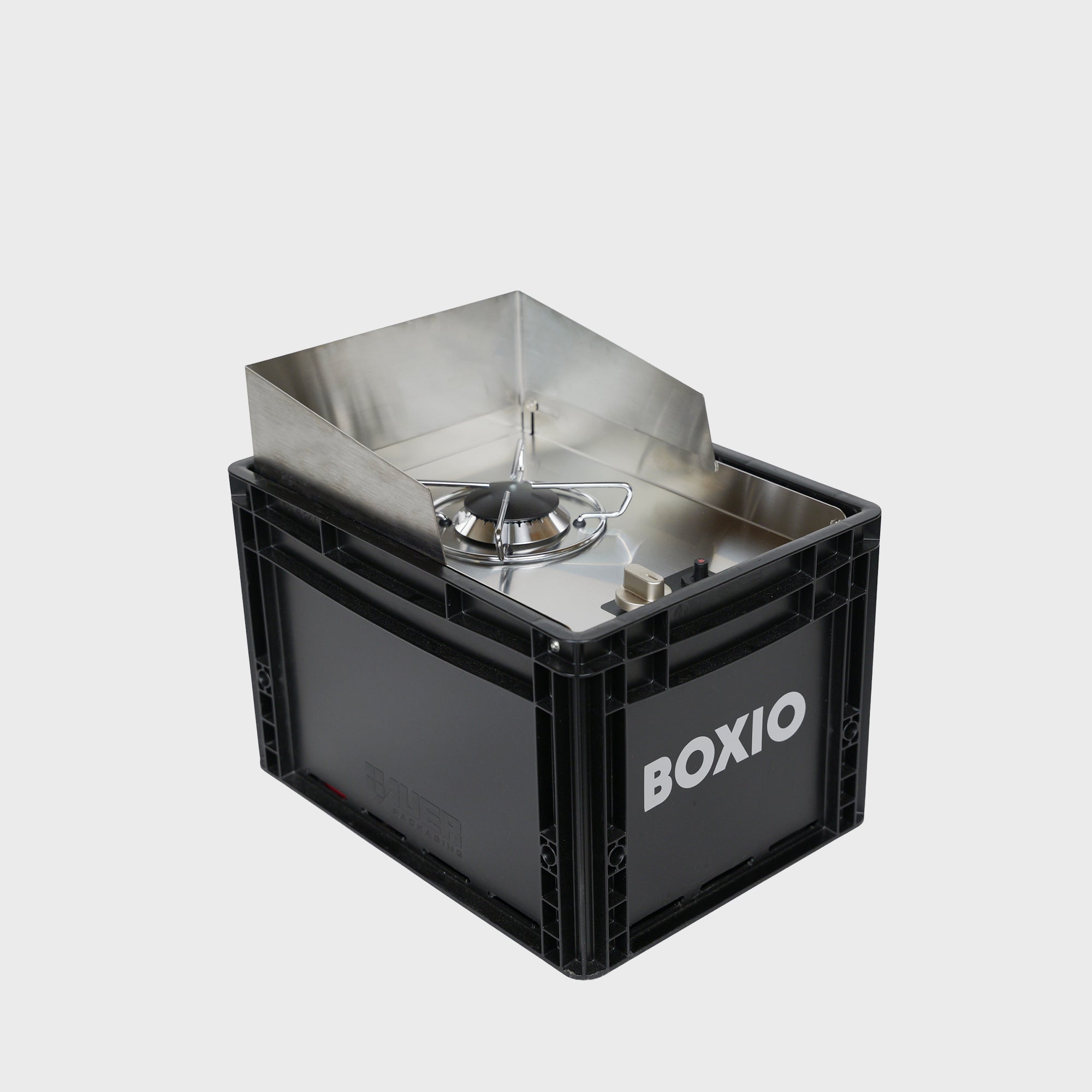
BOXIO COOK 2.0 | Camping gas stove
Should you heat a motorhome in winter?
Yes. An unheated motorhome is uncomfortable, and frost can also damage it. Water pipes can freeze and burst, and moisture can lead to mould. That is why it is important to maintain a comfortable temperature throughout the winter. If you do not use your motorhome in winter, drain the water tank, the waste water tank and all water pipes.

Overview of heating systems
Gas heating
Gas heaters are standard in many motorhomes. They heat quickly and efficiently. However, you should always ensure adequate ventilation, especially at night, to prevent carbon monoxide poisoning. Some campers wonder: "Is a gas heater in a caravan dangerous at night?" A permanently installed and regularly serviced gas heater is designed for use at night. Fit a carbon monoxide alarm for extra safety.
Advantages:
- Fast heat output
- Independent of electricity
Disadvantages:
- Limited gas supply
- Regular maintenance required
Diesel heater
Diesel heaters use the vehicle's fuel tank, making them practical for longer trips. They are efficient and can also run while driving.
Advantages:
- Uses fuel from the vehicle's tank
- Long runtimes
Disadvantages:
- Higher purchase cost
- Operating noise
Electric heating
Electric heaters are a great choice when you have access to an electric hook-up. They are quiet and produce no exhaust gases. However, they rely on an external power source and can drain a battery quickly.
Advantages:
- Quiet operation
- No exhaust fumes
Disadvantages:
- Dependent on an external power source
- High power consumption
How long does a gas bottle last for heating a motorhome?
This depends on the size of the gas bottle and the consumption of the heater. An 11 kg gas bottle can last about 2 to 3 days with continuous heating. It is always wise to carry a spare bottle, especially in remote areas. In winter, use propane rather than butane. Butane does not turn into gas below about 0 °C, while propane still works at temperatures well below freezing.
Can you heat a camper without a parking heater?
Of course! There are several ways to keep your motorhome warm without a permanently installed heater:
-
Hot water bottles: Simple and effective. Fill them with hot, but not boiling, water and put them in your bed.
-
Fan heaters: Small electric fan heaters can provide quick heat, but they need an electric hook-up. They draw too much power for most leisure batteries.
- Gas-powered radiant heaters: Portable and independent of electricity. Many models are not approved for use in enclosed spaces, so check the manufacturer's instructions, ventilate well and use a carbon monoxide alarm.
How does a frost thermostat work in a motorhome?

A frost thermostat switches the heating on automatically when the temperature drops below a set value, to prevent frost damage. This is particularly useful when leaving your motorhome unattended.
Tips for heating and staying comfortable
-
Improve insulation: Use thermal screens on windows and doors to minimise heat loss.
-
Do not forget to ventilate: Regular ventilation is important even in winter to prevent moisture and mould.
- Warm clothing: Layer your clothes to stay warm, and use blankets for extra warmth. A warm hoodie such as the BOXIO MICHAEL hoodie helps on cold evenings.
Other heating options
Alongside these heating systems, there are two other options:
-
Solar-powered heaters: Use energy from the sun, but in winter they deliver little heat because the days are short and often cloudy.
- Wood-burning stoves: Independent of gas or electricity, but not feasible in every motorhome. A wood-burning stove needs professional installation, a proper flue and a carbon monoxide alarm.
Hot meals and drinks in winter

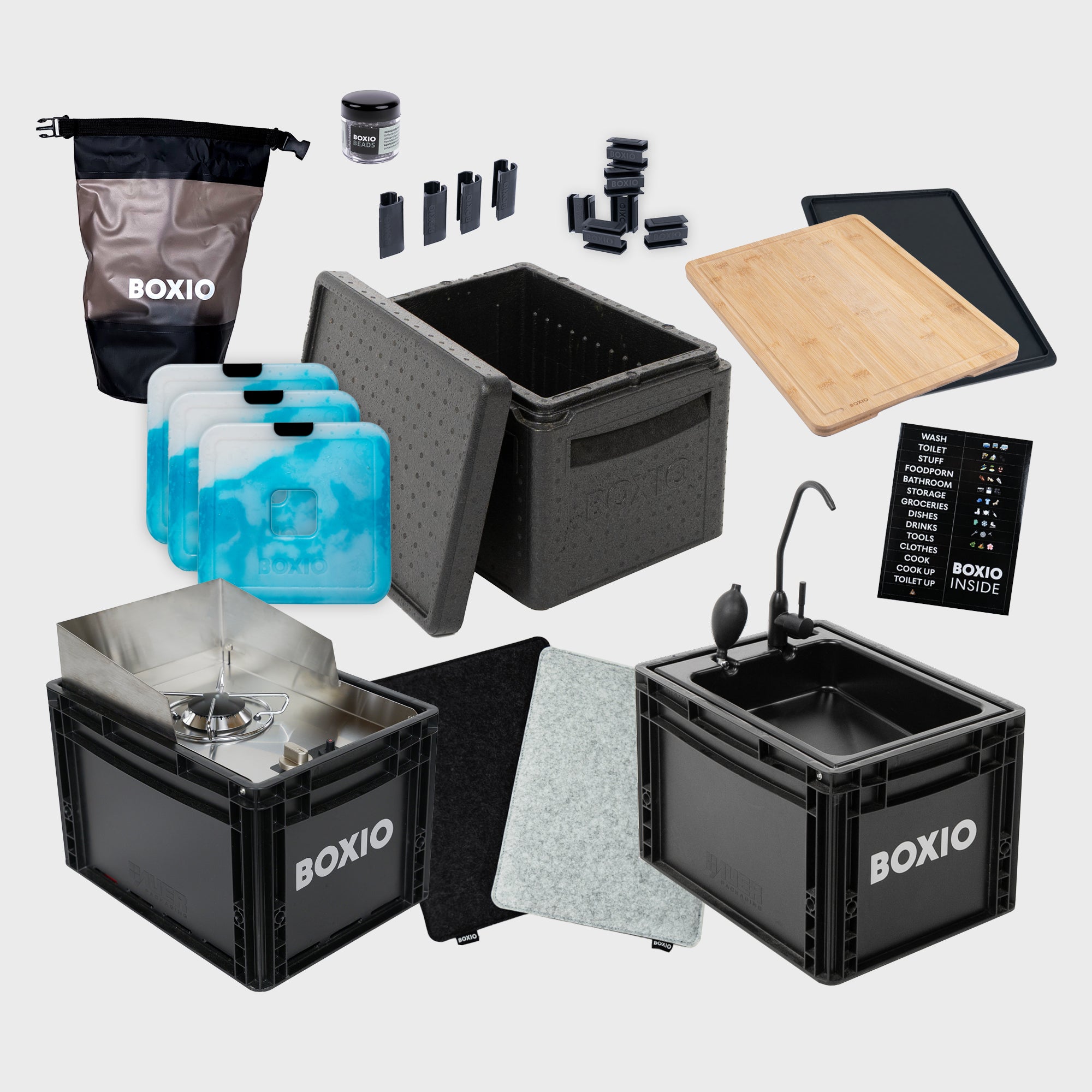
While you prepare your motorhome for the winter, remember your equipment too. With the COOK 2.0 EU camping stove, you can prepare hot meals and drinks that warm you up from the inside. Use the stove only for cooking and never to heat the motorhome. At 40 × 30 × 28 cm and 4.6 kg, the stove comes in Eurobox format and fits next to the rest of your equipment. If you want a complete setup, the BOXIO KITCHEN combines the camping stove, a cool box and a camping sink.